Professional Mould Removal & Remediation Gold Coast
Eliminate mould at the root with the Gold Coast’s most trusted, fully certified mould remediation specialists.
The Gold Coast’s beautiful subtropical climate brings high humidity and heavy summer rains—the exact environment where mould thrives. Whether it is hidden inside your drywall, spreading across your ceiling, or lurking under your carpets, mould is a serious threat to both your property and your family’s health.
Have you spotted black spots on your ceiling, smelled a persistent musty odor, or experienced unexplained health symptoms?
QLD Flood Fire & Mould Solutions (QFFMS) provides rapid, certified mould removal and remediation services across the Gold Coast and South East Queensland.
Mould spreads fast in our humid coastal climate. Don’t wait for it to compromise your family’s health or your property’s structural integrity.
Our team acts quickly to locate the moisture source, contain the outbreak, and eradicate the spores permanently.
Left untreated, mould spores can cause:
- Chronic Respiratory Strain: Recurrent coughing, wheezing, and sudden, severe asthma flare-ups
- Severe Allergic Reactions: Persistent sinus blockages, itchy skin rashes, and burning eyes.
- Neurological & Cognitive Fatigue: Chronic brain fog, headaches, and sleep disruption caused by dense mould exposure.
- Structural Damage: Rotting wood framing, ruined plasterboard, and permanent staining.
Why Choose Our Gold Coast Mould Remediation Experts?
When dealing with toxic spores, an untrained cleaner with a bottle of bleach will only make the problem worse. QFFMS offers an industry-standard, professional enterprise solution:
- IICRC S520 Certified: Our technicians are fully trained and strictly adhere to the highest global standards for professional mould remediation.
- Root-Cause Elimination: We don’t just clean the surface. We use advanced moisture-detection tools or ventilation issue causing the growth.
- Independent Air Quality Testing: We conduct rigorous microbiological assessments, including pre- and post-remediation air testing and surface swabbing, verified by independent internal environmental professionals.
- Advanced Structural Drying: Using state-of-the-art commercial drying technologies and air purifiers.
The Do’s of Mould Management
Fix moisture issues immediately: Fix leaks, plumbing problems, roofs and other building faults that can create dampness.
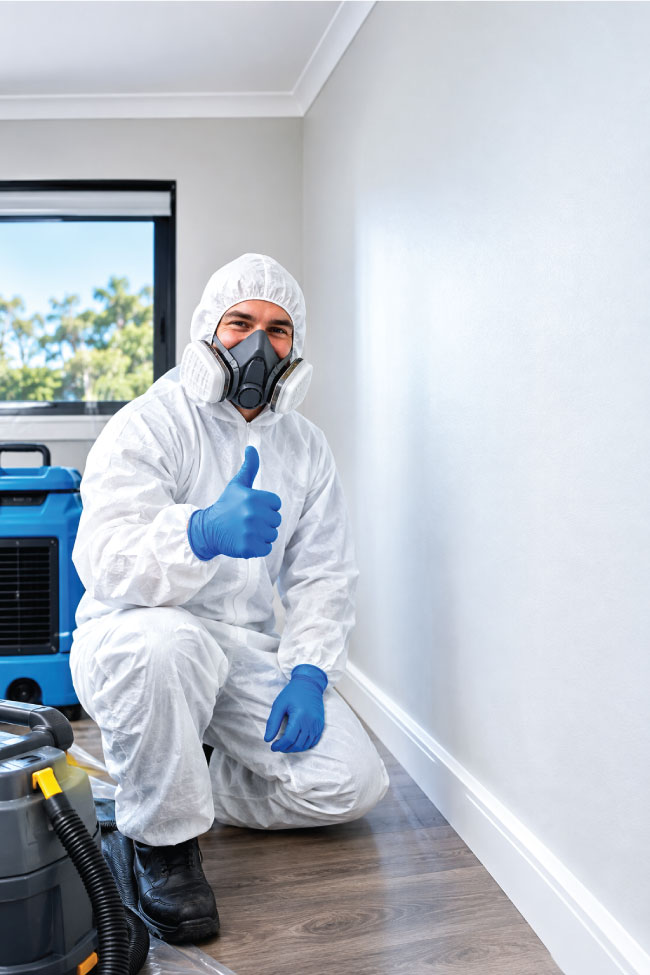
Wear proper protective gear: Ensure you wear enclosed and waterproof footwear, rubber gloves, protective eye wear and a P2 disposable respirator to protect yourself.
Ventilate high-humidity zones: Use exhaust fans in your kitchen and bathrooms.
Dry wet building structures quickly: Clean up wet areas and water damage promptly (within 24–48 hours).
Clean small areas with microfiber cloths: Wipe the area clean with a microfibre cloth and cleaning solution and dispose to prevent cross-contamination.
Discard heavily contaminated porous items: Affected items and our team can assess restoration compatibility.
The Don'ts of Mould Management
Don’t use a dry brush: “it is not recommended to abrasively clean mould from a surface, such as with a dry brush, as this could release spores into the air” and spread contamination -recommended to cover with plastic do not attempt cleaning.
Don’t rely solely on bleach: “the use of bleach may not be effective in killing mould on porous surfaces” as it only bleaches the pigment while the water content inside feeds the root structure
Don’t mix chemical products: “the mixing of cleaning agents is not recommended… mixing bleach and ammonia can produce toxic fumes” — Never mix bleach with white vinegar either.
Don’t paint over active mould: “Do not cover mould by painting or caulking over it, as this will not prevent it from growing.” — It will simply bubble up and eat through the new paint layer.
Don’t ignore hidden musty smells: If you smell a persistent earthy, damp odour but cannot see anything, do not ignore it—mould is likely spreading invisibly inside wall cavities, ceiling voids, or subfloors.
Don’t tackle large outbreaks alone: If the structural mould contamination covers a widespread area (larger than 3×3 metres) or stems from contaminated sewage water, don’t attempt a DIY cleanup.
Our 5-Stage Scientific Mould Remediation Process
We do not just spray cheap, masking chemicals or bleach over surface stains. Our mould remediation Gold Coast technicians execute a strict, five-stage structural decontamination process designed to break the moisture cycle and permanently eliminate the threat.
-
Digital Moisture & Thermal Tracking
We deploy infrared thermal imaging cameras and structural moisture meters to identify the exact, invisible leaks feeding the fungal colony. -
Negative Air Pressure & Complete Containment
We set up physical containment zones using heavy-duty plastic sheeting and industrial HEPA air scrubbers. This prevents microscopic spores from escaping into clean rooms during treatment. -
Eco-Friendly Antimicrobial Extraction
Our team physically extracts heavily impacted porous materials and applies commercial-grade, non-toxic antimicrobials to destroy the subterranean root structures (mycelium) inside deep surfaces. -
Heavy-Duty Structural Drying
We position high-velocity air movers and commercial drying technologies to drop your home's relative humidity below 50-60%, making the environment non conducive to mould growth. -
Post-Remediation Clearance Certification
We conclude every major project with independent air quality clearance testing, providing you with documented proof that your indoor environment is clean, safe, and entirely restored
Frequently Asked Questions About Gold Coast Mould Removal
Can I just clean the mould myself with bleach?
No. Common household bleach only strips the pigment from the mould, making it look gone. The water content in bleach actually feeds the roots (mycelium) hidden deep inside porous surfaces like drywall, causing it to return worse than before.
How much does professional mould removal cost on the Gold Coast?
Costs vary depending on the surface area, severity of the growth, and underlying moisture source. We provide transparent, upfront quotes following our initial comprehensive inspection.
Is the treatment safe for my pets and children?
Absolutely. We use advanced, non-toxic, and bio-friendly treatments that are completely safe for your family and pets while remaining highly lethal to fungal spores.
How long does a standard home mould remediation process take?
A standard home mould remediation project typically takes between 2 to 5 business days to complete safely. The first day focuses entirely on establishing physical containment barriers and negative air pressure zones to halt spore travel. Days two and three involve physical antimicrobial cleaning, structural extraction, and heavy-duty industrial dehumidifier placement. The final phase concludes with specialized air filtration run-times and a clearance certificate verification to prove your indoor air quality is officially safe.
Does home insurance cover mould removal in Queensland?
Home insurance policy coverage in Queensland generally covers mould removal only if the fungal growth directly resulted from a sudden, accidental insured event, such as a burst internal water pipe or sudden storm roof damage. Conversely, insurance policies consistently exclude coverage if the mould stems from gradual maintenance neglect, poor home ventilation, or rising subfloor dampness.
We recommend checking your specific Product Disclosure Statement (PDS) or requesting our comprehensive moisture report to assist you with documenting your insurance claim evidence.
Is it safe to stay in my house during a toxic black mould treatment?
You can safely stay inside your home during treatment if the mould is contained within an isolated room using heavy-duty plastic containment zones and negative pressure.
However, if toxic black mould spans across multiple high-traffic areas, central HVAC systems, or if occupants suffer from severe respiratory issues, asthma, or compromised immunity, it is highly recommended to vacate the property for 48 to 72 hours.
Our local technicians prioritize setting up isolated structural barriers to minimize lifestyle disruption whenever safe and possible.
Why is mould so common in Gold Coast properties compared to other regions?
Mould is uniquely prevalent across the Gold Coast due to our subtropical climate combined with regular ocean breeze relative humidity levels exceeding 60-70%. These conditions create the exact environment where fungal spores grow rapidly when paired with stagnant indoor air currents or poor ceiling ventilation.
Properties in humid coastal suburbs like Surfers Paradise, Burleigh Heads, and Robina require specialized humidity control metrics, subfloor aeration setups, and regular exhaust cleaning to permanently break the cyclical moisture growth patterns.